
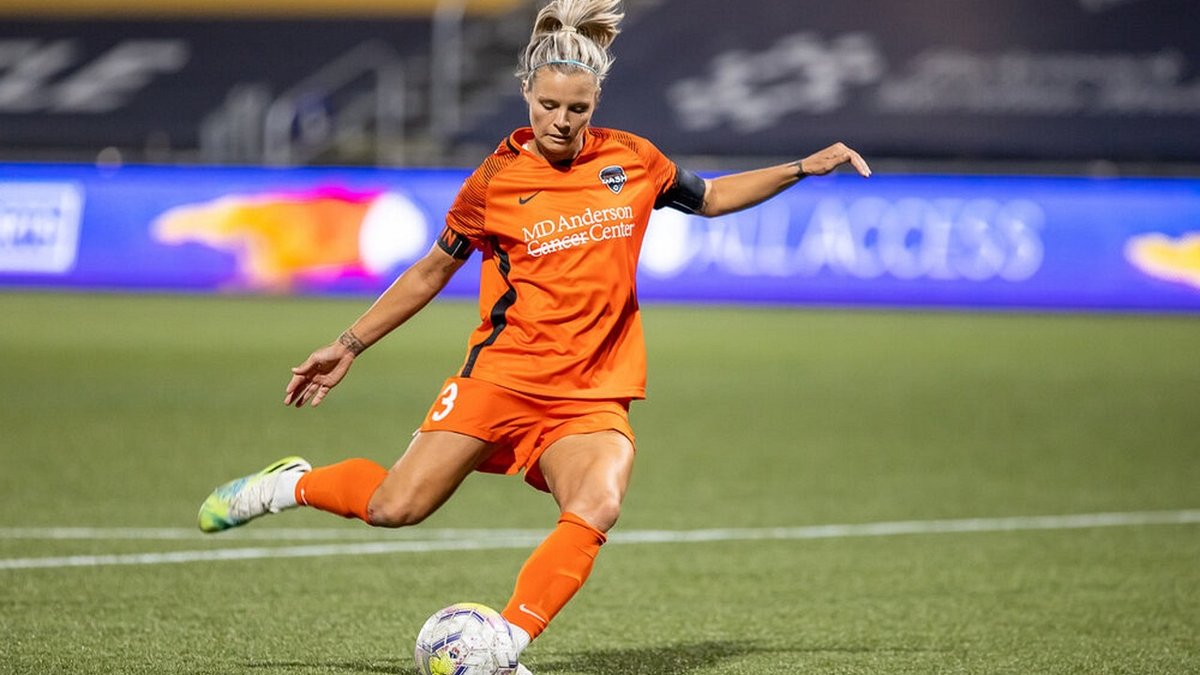
If you play for a club in Cornwall, Devon, Somerset or anywhere else across the South West, you will have heard a coach shout "it all starts with your feet." They are right. Accuracy in women's lacrosse rarely fails because of the stick — it fails because the lower body was never set. Before you worry about ripping a shot past a goalkeeper, spend a few sessions thinking only about your stance and footwork.
Start in an athletic position: knees bent, weight on the balls of your feet, hips slightly lower than you would naturally stand. Your feet should be roughly shoulder-width apart, with the opposite foot forward to your shooting hand — so a right-handed shooter leads with the left foot. This staggered stance lets you rotate your hips through the shot rather than pushing the ball away with your arms alone.
Try this on your own: place a cone three to five metres in front of a goal, take five shots from a stationary stance, then five where you step hard into the shot with your lead foot. Most players feel an immediate jump in both power and consistency. That step transfers energy upwards through your hips, torso and shoulders, and the ball leaves the stick on a far truer line.
Power in the women's game does not come from a big wind-up. It comes from a short, sharp wrist snap that releases the ball off the top of the stick head. Think of flicking water off your fingers rather than throwing a punch.
To feel it, hold the stick with your top hand near the throat and your bottom hand at the base. Push your top hand forward while pulling the bottom hand back — this creates the lever that sends the ball out quickly. The snap should be compact. If your whole arm is swinging like a windmill, you are losing control.
Practise the motion against a wall or with a partner, twenty reps at a time, focusing purely on the flick rather than distance.
Most goals in grassroots matches are scored on the move, not from a set position. Learning to shoot while running — and from the awkward angles you actually get in a game — is what separates a tidy practice player from a genuine threat.
When shooting on the run, your feet should be moving before the ball arrives. Catch on the outside shoulder, take one or two hard strides, and shoot off the correct foot. If you are right-handed, that means shooting off your left foot as you drive across the fan. Shooting off the wrong foot throws your shoulders open and sends the ball wide.
Work the three main angles deliberately:
Set up four cones around the goal at these positions and take three shots from each, alternating feet and speeds. Ten minutes of this three times a week adds up quickly.
Accuracy fades the moment you get tired or a defender closes in, so your practice needs a bit of both. Try these with a teammate or at your club's next session:
Keep a simple tally of shots on target each session. Progress in shooting is rarely dramatic, but consistent practice across a season is unmistakable.
A few habits trip up South West players again and again. If shots are sailing high, you are probably releasing too early or dropping your top hand. Slow the motion down and exaggerate the follow-through. If shots drift wide, check your shoulders — they are likely opening before your hips finish rotating.
If everything feels flat and weak, look at your base. Players who shoot with straight legs lose the whole chain of power below the waist. Bend those knees and step into the shot.
Finally, avoid the temptation to aim at the goalkeeper's body. Pick a specific corner every single time, even in warm-ups. Your brain learns where you look.
Technique is built in practice, but it shows up in games. In your next fixture, set yourself one small target: perhaps shooting off the correct foot every time, or following through on every release. Judge yourself on the process, not just whether the ball hit the net.
Grassroots lacrosse across the South West is growing fast, and the players who improve quickest are the ones who treat shooting like any other skill — repetitive, deliberate and a little bit boring at times. Put in the work on your footwork, your wrist snap and your angles, and the goals will follow.

Hi, my name is Anthony kuber. I am artist and fashion designer.
I love to travel and writing blogging.
Your email address will not be published. Required fields are marked *
Software Developer & Writer
Hey, I'm Diva, a developer and writer blending code and creativity. I'm driven by a deep curiosity and a relentless pursuit of excellence. Join me as I craft digital solutions and captivating stories.


